
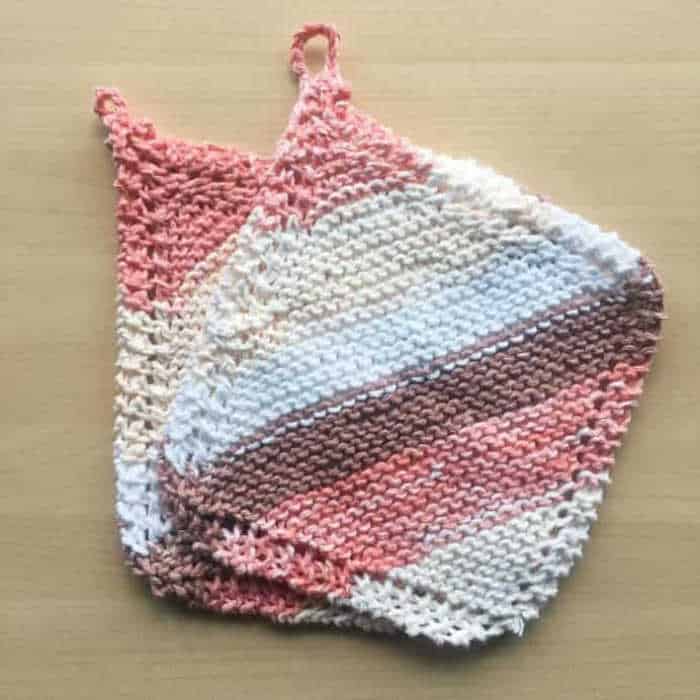
Potholders are excellent, quick knitting projects. They’re functional and fun to knit.
The best yarn for potholders doesn’t transfer heat. Cotton is the best choice for potholders.
Wool yarn is also great contender for the best yarn for potholders.
Note: If you click a link on this page and make a purchase, I may receive a commission, but at no extra cost to you. Learn More.
Not all yarn types are suitable for potholders, like acrylic yarn.
Read on to find the best quality yarn for knitting potholders and details on what things to consider in my guide
I reviewed and updated this post on May 31, 2022.
Table Of Contents
What Is The Best Yarn For Potholders?
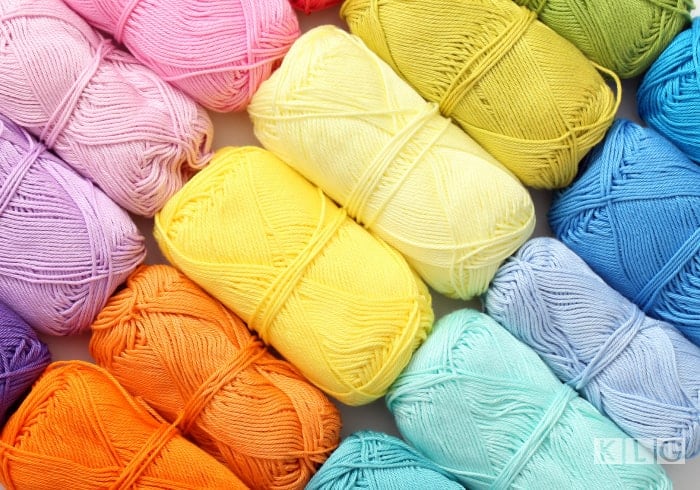
The best yarn to use for making potholders are cotton yarn or wool.
Why Is Cotton Yarn The Best Yarn For Potholders?
Cotton yarn is the best yarn for potholders because
- Cotton yarns don’t melt when hot pots and pans are placed on top
- Cotton yarn potholders are easy to clean
- The thing is absorbent without losing its shape
The qualities of this type of yarn mean it’s exceptionally functional in a kitchen.
The best is 24/7® Cotton Yarn from Lion Brand or Re-Up Yarn. They’re sturdy, absorbent, inelastic, matte (not shiny), and machine washable.
Organic cotton yarn (made with sustainable production practices) is good for a knit or crochet potholder, as is mercerized cotton thread.
Use 100% cotton for a cotton potholder, not blends.
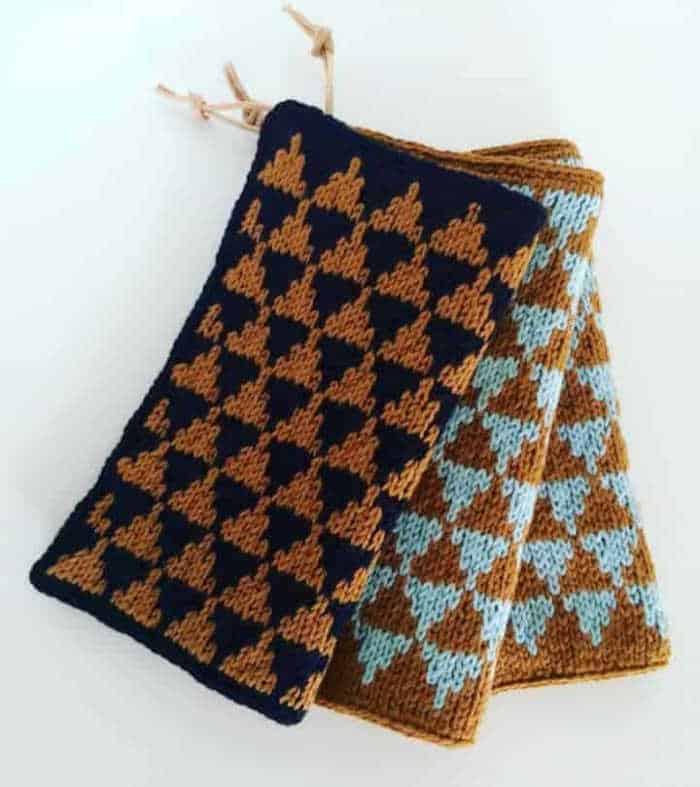
Cotton is also great for
- Dishcloths
- Facecloths
- Normal cloths
- Scrubbies
- Coasters
- Oven mitts
- Other items for kitchen use
- Amigurumi
The range of possibilities are endless!
Now you’re sorted for potholders. Why not see my best arm knitting yarns post for your next project?
Alternatives To Cotton Yarn
Silk yarn, a self-extinguishing fiber, is good in a potholder. But silk yarn isn’t cheap!
An excellent choice for silk blends for a potholder is Gloss DK Yarn.
Wool Yarn For Potholders
Although cotton yarn is the number one choice for best yarn for potholders, wool is highly recommended.
Wool yarn doesn’t melt if it comes in contact with heat. Great wool yarn for a potholder – Garnstudio Drops Merino.
If it catches fire, it should extinguish itself once it’s no longer in contact with the flame.
Wool yarn prevents heat from traveling through crochet pot holders to underneath. (Merino wool has the same effect.)
It can felt to provide a thicker “fabric” and is water-resistant as well.
The problem with using wool is it’s not as washable as cotton or as easy to clean or care for.
Machine washing a wool potholder in a washing machine could end up turning into felt and ruin the potholder.
After all your work of making one, you don’t want it to be ruined after the first wash!
To combat this, you could hand wash your woolen potholders.
By all means, if you want to felt your potholder, machine washing is a breeze!
Ball winders for yarn are excellent tools to keep your stash neat.
Yarns To Not Use In A Potholder
Yarns like the following aren’t good because of their lack of heat resistance and are flammable.
- Acrylic
- Polyester
- Plarn (made from plastic bags)
- Orlon
- Rayon
- Tencel
- Nylon
Avoid blends that have the above as part of the make-up too.
Though wool is the number two choice for most crafters, use 100% wool.
One way to determine when you shouldn’t use a yarn for knitted or crochet potholders is whether they’re susceptible to heat.
Superwash wool may seem good, as it makes it machine washable.
However, the treatments of chemicals used to make wool ‘superwash’ may cause flammability.
Don’t use acrylic yarn to make knit or crochet potholders. The synthetic nature of these yarns means they melt.
Where is the best place to buy wholesale yarn? Here’s a suggestion.
What To Consider When Choosing Best Yarn For Potholders?
When you’re making potholders, you a need yarn that’s
- Heat resistant
- Easy to clean
- Machine washable
- Absorbs liquids (good for times when you accidentally create spills!)
- Holds its shape after washing
- Knits/crochets up thickly
- Durable and sustains wear and tear
- Any color you fancy
- A price you can afford
Found some helpful information? Now have a look at some funny gifts for knitters.
(The above qualities make great yarn for scarves. So there’s a project to make with the leftover scraps!)
Here are other factors to consider.
The main reason for using a potholder is to avoid burnt fingers or marks on kitchen surfaces.
A potholder protects skin and kitchen surfaces when cooking or making food like cookies.
Having a large size is important to help with insulation against the high temperature.
You want your potholder material to be thick, so it insulates from the heat. Pot holder materials mustn’t melt under high temperatures or transfer too much heat.
One tip to ensure it insulates is adding an inner layer of Insul-Bright. It’s great for many handmade projects.
Knit two pieces and sew them together to create a thicker layer if you want.
Do the same if you love a particular pattern but it’s a little holey. Knit a separate piece for the back.
This tip is especially helpful for crocheters as a crochet hook can make large holes between stitches!
It’s best to knit the item from a yarn ball on straight needles, never in the round.
When considering the best yarn to use in a potholder, you’d want something absorbent but without losing its shape.
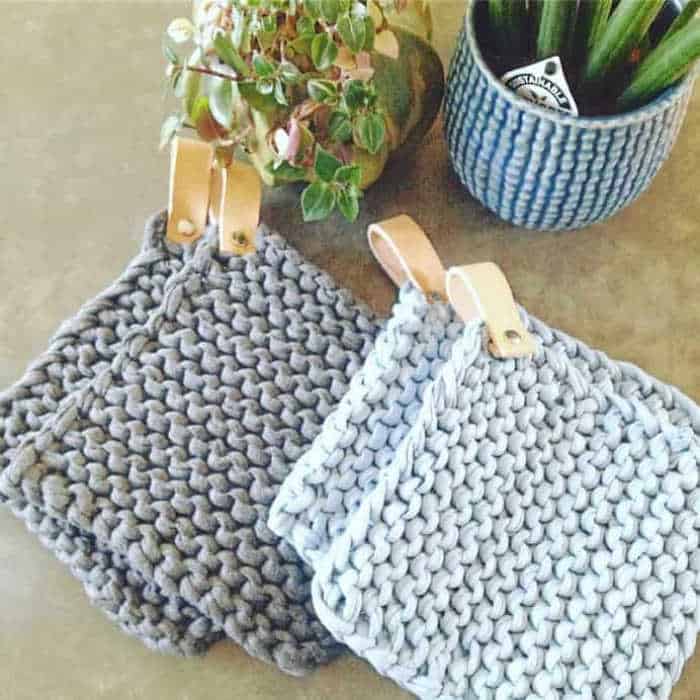
Suitable yarn is easy to clean. Potholders, like any functional items or kitchen decor get dirty quickly! Keep that in mind when choosing colors.
You want a potholder that can be used, washed easily (preferably in the machine washer), and used again.
A bonus if it can be put in the dryer. Hand washing wool or cotton potholders is annoying.
A good idea is yarn options with a decent amount of yardage. Holding a pot with both hands? You need a pair of two potholders.
Choose a pattern for making potholders with a good thickness of the knitted fabric.
Using the garter stitch is an excellent choice for potholder stitch patterns. Might be a good way to teach children to knit.
It’s stretchy, and the stitches are close together when you maintain proper tension.
The square kind is the most common, but its semi-circular cousin is great for pulling a dish from the microwave. Avoid getting burnt upon touch or an accidental splash!
Ravelry has plenty of ideas for knit potholder patterns and crochet stitch ones (and features like a forum and video tutorials for when you get stuck.)
When knitting a potholder, keep your tension firm. This helps to create a better overall fabric and stitch definition.
If you knit loosely, it’ll be difficult, but when you make others, it gets easier!
What Yarn Weight Is Best For Potholders?
Consider in the yarn’s weight or thickness something thick to insulate from the heat in the best yarns to make potholders.
Look for a DK, worsted weight yarn, or heavier thread.
(Look for “worsted weight yarn” and the number 4 symbol of the yarn label.)
Using these weights of yarns means the knitted fabric is thick and protective.
A yarn ball holder bowl keeps your fibers from getting tangled as you knit.
24/7® Cotton Yarn is the best yarn for potholders. (This product is available in almost any craft store like Joann and is good value for money.)
I hope this post answered your questions.
I know you’ll find some gorgeous natural fibers to make your potholders to hang up for kitchen décor. They’ll be admired by everyone